RESTORATIVE JUSTICE PROGRAM/DA’s OFFICE
The purpose of “Restorative Justice” (“RJ”) is to address nonviolent, non sexual assault, low-level crimes through community-based solutions by redressing the harm caused by these offenses outside of the traditional criminal justice system (e.g., without using trials and jail/punishment). The goal of RJ is to focus on having the offender repair the harm done: (1) to the victim; and, (2) to the community, by having local citizen panels help fashion the remedy with the victim, and with the offender–who must confess to their crime from the beginning. The goal is for all to understand the root cause of the crime, so that the victim, the community, and the offender, can all move forward in a positive direction. RJ seeks inclusive remedies to the harms of the crime, rather than just to inflict punitive consequences on the offender, which does little to repair the damage done to the victim, or to the community. Such strategic solutions provide offenders with a meaningful “second chance” to turn from their crimes, while simultaneously addressing the root causes and ill effects of their criminal actions. RJ reduces crime and recidivism, and frees up jail cells, as well as prosecutor time, to focus on more serious crimes.
THE “FOUR PILLARS” OF RESTORATIVE JUSTICE:
- Restore the Victim (The emphasis here is on the victim, where the offender is required and is committed to volunteering to make things right with the victim by working for and/or paying restitution to the victim to “make them whole”);
- Restore the Community (Create a direct role for Pueblo residents to oversee the resolution of offenses in our City, where they can precisely fashion the offender’s required steps to repair the community relationship and restore the victim, such as performing relevant community service in the area impacted by the crime; and by taking responsibility for their crimes by being fully accountable to Pueblo citizen representatives on the Special Panel);
- Restore the Offender (Offer offenders a real and meaningful “second chance” in the Criminal Justice System by avoiding a criminal conviction on their record upon successful completion of the program remedy —where they fully understand the consequences of their crime, and do whatever is necessary to repair the relationship with the community); and,
- Educate the Offender (Help offenders to fully understand why they have committed their crime—such as alcohol/drug abuse, poor anger management, poor decision-making, unaddressed mental health issues, or other topics requiring them to change or modify their behavior—and then offer a recovery plan and strategic way to implement the necessary steps in their lives to successfully exit the criminal justice system altogether);
How Does It Work?
To qualify, the offender (of a low-level, first-time, non-violent, non-sexual, crime, misdemeanor, or infraction) must admit guilt, acknowledge the harm done to the victim, and to the community; and then also be fully willing to discuss an appropriate remedy for all parties concerned, and be committed to fulfilling the remedy and be held accountable to the remedial plan agreed to with the Pueblo citizen panel representatives (see below);
The three local citizen volunteer panelists (one of them on each Panel is a “Facilitator” instructed by DA Program Director), representing the community with respect to the crime committed, meet directly with offenders in a face-to-face facilitated conference, with the victim also participating, if the victim chooses to be a part of the process (or just to be heard by the Panel)—There would be several such panels of Pueblo citizen volunteers as the Program develops and grows; o During the conference, the 3 panelists (& victim) would work to do the following:
- Name and identify all the harms the victim and community suffered as a result of the crime;
- Ask questions of the offender to understand all the circumstances surrounding the crime; and,
- Decide together, with the offender, and the victim, the certain steps that will be necessary to make things right with the victim, and with the community, as well as require self-improvement steps for the offender, so as to regain a healthy place in the community and retore community ties;
- This face-to-face dialogue is designed to encourage full accountability and personal responsibility on the part of the offender to remedy the situation as fully as possible;
- Victims can participate in the conference and are consulted at all times; they are integral to this process of the DA’s Office;
- It is necessary that: (1) there is active monitoring and follow up by the DA’s Office to ensure that there is full compliance by the offender with each aspect of the remedial plan as set forth by the Citizen Panel; and, (2) The DA Coordinates with Appropriate Social Agencies to Assist the Offender Comply.
POTENTIAL BENEFITS TO PUEBLO DA OFFICE
Enhance Tangible Results; Publicize The Results to the Community:
- There Will Be a Reduction in the Overall Pueblo Crime Rate;
- There Will Be a Reduction in Repeat Offenses/Recidivism Rate in Pueblo;
- Offenders Will Be Able to Avoid a Criminal Record and Instead Will Be Able to Pursue Educational Opportunities/Work Apprenticeships/Better Behavior/Available Social Service Programs, as Part of Agreed Outcomes;
- Time & Efficiency: Deputy DAs Will Have Much More Time to Focus on the Investigation and Prosecution of More Serious Crimes, and More Time to Investigate and Prepare for Trials;
Campaign Issue: DA Candidate Aber’s Election (2024):
- Unify Political Constituencies → Tough on Crime/Personal Responsibility Victim Advocates/Law Enforcement Supporters Will Welcome the Tangible Results of Restorative Justice for the City/Businesses/Morale—Will Be Able to Garner Support from “Tough on Crime” Republicans;
- Community Activist/2nd Chances/Rehabilitation/Race & Class Concern Supporters Will Welcome a Humanistic/ Communitarian Approach—Will Be Able to Garner Support from Traditional Liberal Democrats;
- Appointing a Director, Who Is a Pueblo Native, with Latino, Legal & Community Engagement Experience, Will Help with the Understanding and Sensitivity of All these Issues with Pueblo Voters;
- Effective and Strategic Crime Prevention;
- Emphasis Is on Being a Victim-Centered Program—Actively Involving the Specific Issues and Concerns of the Victim in the Process; More than Just Being a “Witness for the Prosecution,” with No Elevated Voice/Role.
- Involve/Consult Concerned Pueblo Citizens Wanting Community Justice, Crime Reduction & Responsible Sentencing;
- Sets DA Candidate Kyle Aber Apart in Overall Approach. – Funding/Budgeting/Economic Concerns:
- City, County, State & Federal Grant Funding Is Available for Such Innovative Programs;
- Request Political Support from Mayor, City Council, County Commissioners, State Legislature; Governor; Police & Sheriff;
- Request Additional Financial Support from Foundations, Charity, Private Sources of Grant & Investment Funding;
Please See Links:
- Yolo County DA — Restorative Justice Defined | Yolo County District Attorney.
- Articles about Restorative Justice:
- What is “Restorative Justice” and How Does it Impact Individuals Involved in Crime? | Working with BJA NTTAC (ojp.gov)
- https://www.c4rj.org/what-is-restorative-justice/success-data
- https://www.restorativesolutions.org.uk/news/the-benefits-of-restorative-justice-for-victims-and-offenders
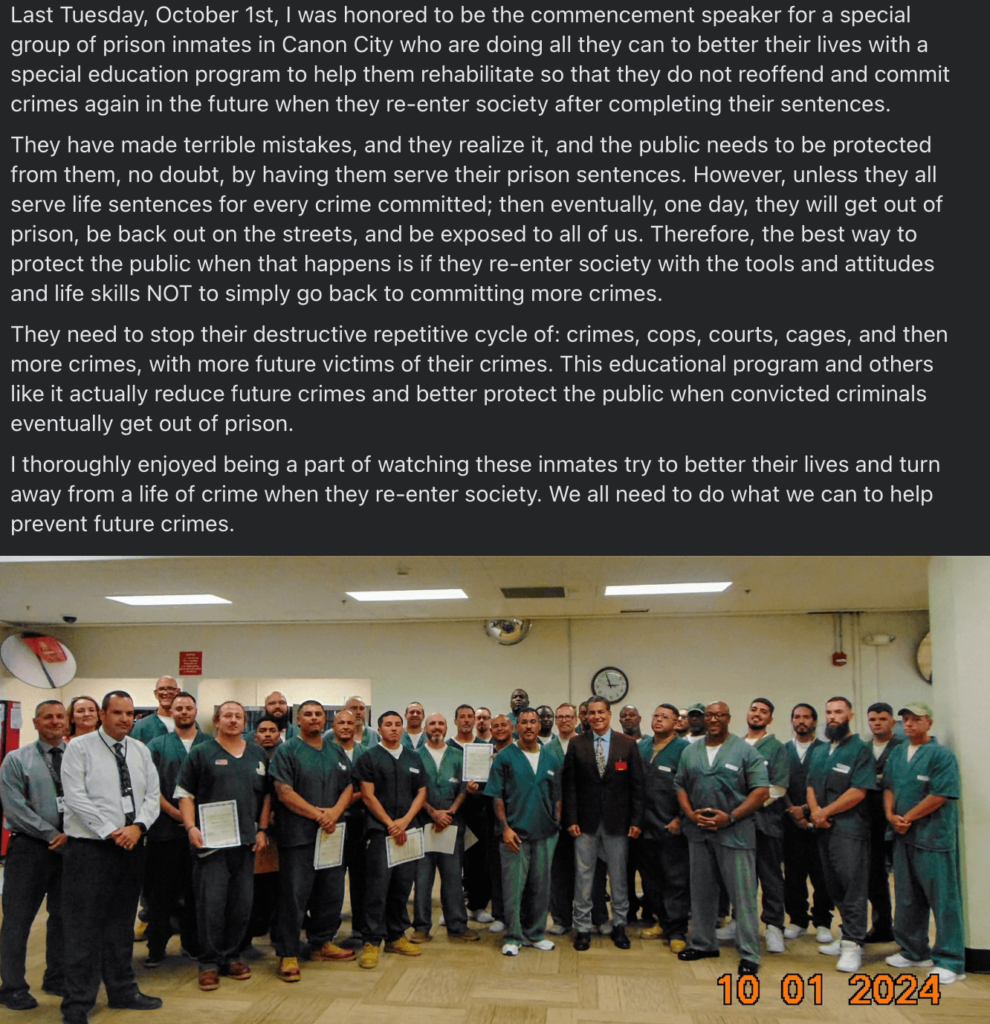
Supporting Redemption: Educating Inmates for a Safer Future